
UPVC doors use a multi-point locking system, engaging several points along the frame rather than relying on a single latch. It’s a stronger design, but it does mean there are more moving parts that can wear, jam or fall out of alignment over time.
If your door has started sticking, refusing to lock, or making strange noises when you turn the key, the good news is that most UPVC door lock repair jobs are straightforward once you know what’s causing them.
Here are the most common problems we see, what’s behind them and how to fix them.
Loose, floppy door handle
A handle that feels loose, drops down on its own, or needs lifting higher than usual before the door will lock is usually a sign of a worn spring or gearbox inside the mechanism. Every time you lift the handle, small internal cams engage the locking points along the frame, and years of daily use wear these parts down.
A loose handle rarely fixes itself, and left alone it puts extra strain on the gearbox, so it’s worth having it looked at before it fails completely.
Key turns but the door won’t lock
If your key turns smoothly but nothing happens at the door, the problem is usually inside the gearbox rather than the cylinder. The cylinder is simply turning without engaging the locking bolts, which often points to a broken or disconnected gearbox cam. This is not something to force.
Repeatedly turning a key against a jammed mechanism can snap the cylinder or damage the gearbox further, turning a simple repair into a bigger job. Give a professional a call to get this replaced.
Door won’t lock when closed
A door that locks fine when open but won’t engage once closed almost always comes down to alignment. If the door has dropped slightly on its hinges, or the frame has shifted with the seasons, the locking points no longer line up with the keeps in the frame.
In most cases this is fixed by adjusting the hinges rather than replacing the lock itself, though if the door or frame has warped or dropped significantly, our window and door repair and replacement service can put that right too.
Stiff, sticking or grinding lock
A lock that feels stiff, grinds when you turn the key, or needs extra force to operate is usually suffering from a lack of lubrication or a build-up of dirt inside the mechanism. UPVC door locks get used dozens of times a day and rely on smooth-moving internal parts to work properly.
A light silicone-based spray applied to the keep, bolts and cylinder can often resolve this. Avoid oil-based lubricants like WD40, since these attract more dirt and can make the problem worse over time.
Worn or snapped euro cylinder
The euro cylinder is the part the key actually turns, and it takes more daily wear than almost any other component. Signs of a failing cylinder include a key that feels loose, one that is increasingly hard to turn, or a lock that has clearly been forced.
Euro cylinders are also a known weak point for lock snapping, where the cylinder is deliberately broken during a break-in attempt. If yours has been damaged this way, our insurance claims service can deal with your insurer directly while we fit a stronger, anti-snap replacement.
Door won’t lock in hot weather
UPVC expands slightly in warm weather, and on a hot day this can be enough to throw the locking points out of alignment, even on a door that works perfectly the rest of the year. If your door only plays up during a heatwave, that’s a strong sign the fix is alignment rather than a faulty lock.
Adjusting the hinges or keeps to allow a little more tolerance usually solves it for good.
Can you fix a UPVC door lock yourself?
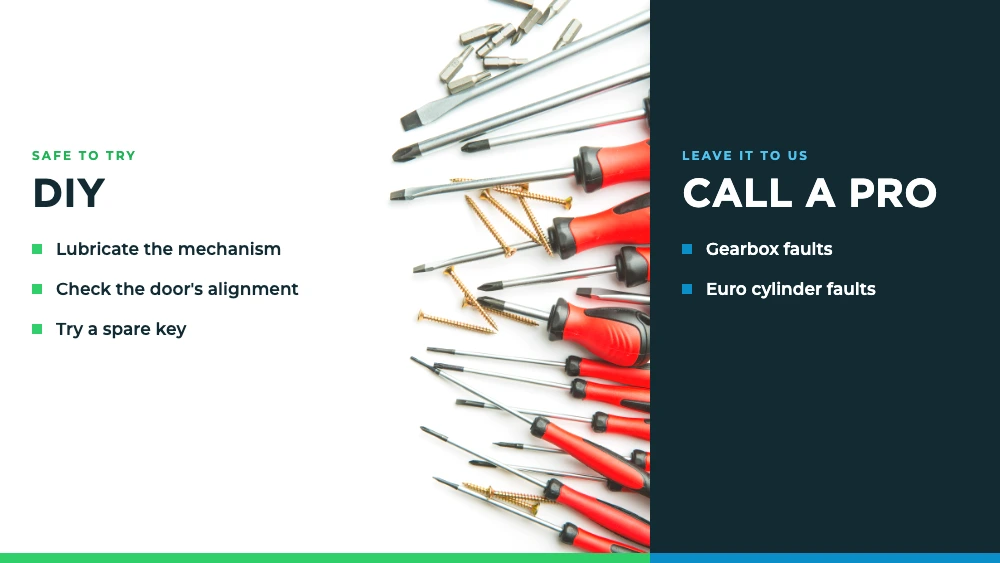
Some of these issues are DIY-friendly:
- Lubricating the mechanism
- Checking the door’s alignment
- Trying a spare key
These are all safe to attempt yourself.
We’d always recommend calling a professional for anything involving the gearbox or cylinder.
Multi-point mechanisms are precise, and taking one apart without the right parts or tools can leave you with a door that won’t lock at all, or worse, one that won’t open. If your home is left insecure while you wait for a repair, our emergency response service can secure it quickly in the meantime.
How much does UPVC door lock repair cost?
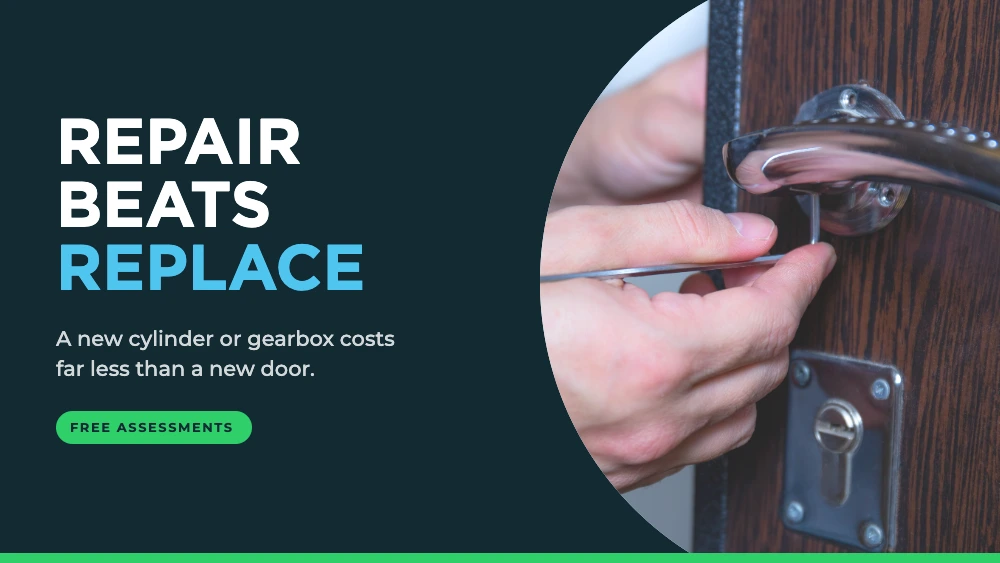
Cost depends entirely on what’s gone wrong. A lubrication fix or hinge adjustment is a minor job, while a euro cylinder replacement is a modest, inexpensive repair compared with fitting a new door.
A full gearbox or mechanism replacement costs more, since it involves stripping out the multi-point system, but it is still significantly cheaper than a new door in almost every case. We always start with a free assessment so you get an accurate price for your specific lock before any work begins, through our lock repair and replacement service.
How to keep your UPVC door lock working properly
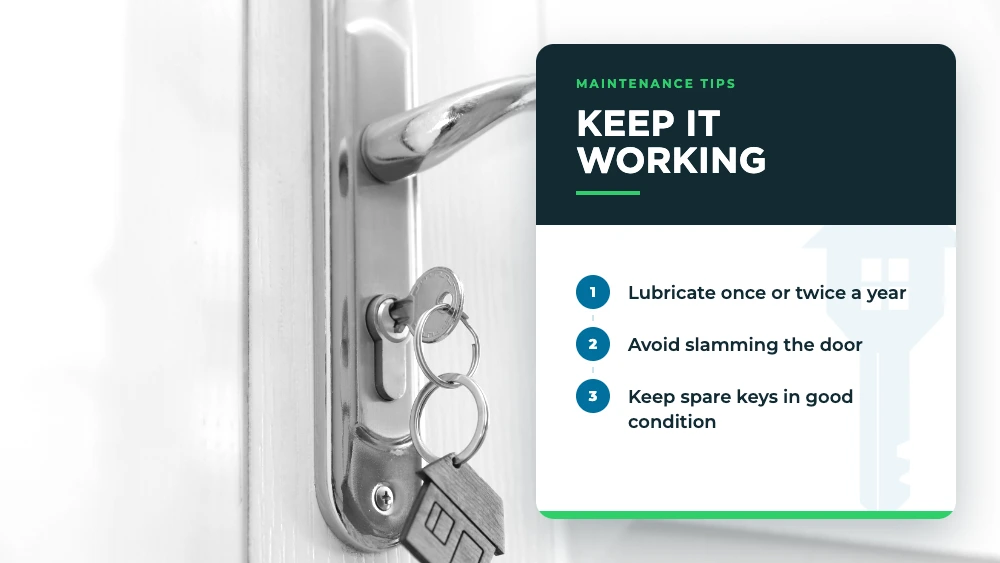
A little maintenance goes a long way with UPVC door locks. Lubricating the mechanism once or twice a year keeps everything moving smoothly, and avoiding slamming the door reduces the strain on the gearbox and hinges.
Keep spare keys in good condition, since a worn or bent key can damage a cylinder over time, and don’t ignore small issues like a stiff handle or a door that needs a shove to lock, since these tend to get worse rather than better.
Common questions about UPVC door lock repair
These questions come up often when people search for help with a UPVC door lock. If your issue isn’t covered above, get in touch and we’ll talk you through it.
How do you fix a broken UPVC door lock?
It depends on the fault. Loose or stiff mechanisms often respond to lubrication or a hinge adjustment, while a broken gearbox or cylinder usually needs replacing. Start with the simple checks, and if the lock is still jammed or won’t engage, call a professional rather than force it.
Is it cheaper to repair or replace a UPVC door lock?
In most cases, repairing is the cheaper option. Replacing a single component, such as the cylinder or gearbox, is far less expensive than fitting a new door, and even a full mechanism replacement is usually more cost-effective than starting from scratch. Replacement is normally only needed if the door itself is damaged beyond repair.
Can you replace the locking mechanism on a UPVC door?
Yes, the multi-point mechanism inside a UPVC door can be replaced without replacing the whole door, as long as the frame itself is in good condition. It’s a precise job that needs the correct mechanism for your door’s size and backset, so it’s worth getting a professional measurement rather than guessing.
